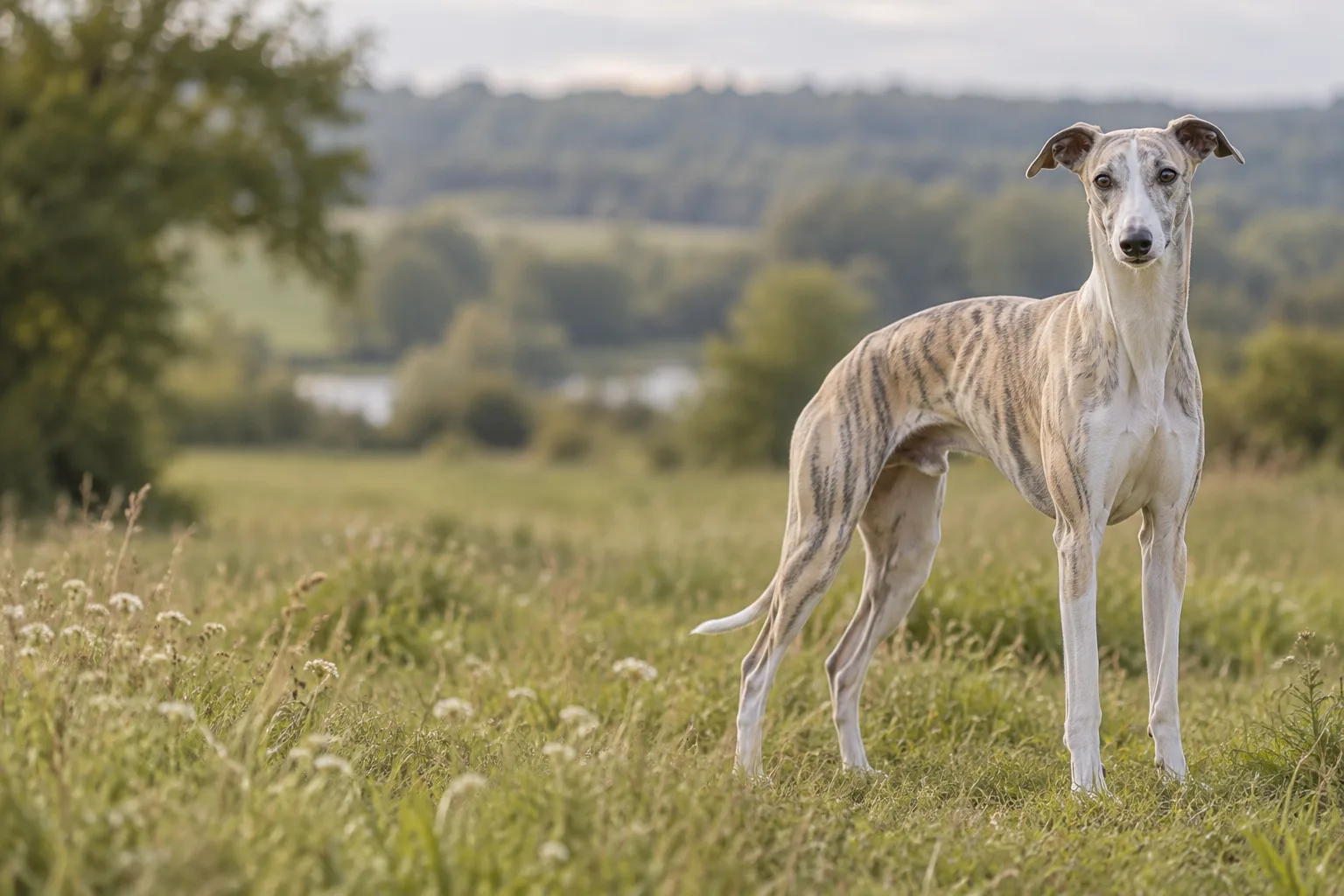
Why would a farm dog that once walked cattle along quiet Belgian lanes end up on a raid carried out by American special forces on the other side of the world? That is not a flight of fancy. It is the documented path of the Belgian Malinois, a Malinois named Cairo took part in the 2011 raid that killed Osama bin Laden, and once you know where this breed actually came from, the dog waiting by your front door makes a great deal more sense. The Malinois was not built to be a police dog, an army dog or a sport dog. It was built to do an ordinary farm job, extremely well, for shepherds who needed a dog they could trust without question.
It is also only one quarter of a bigger story. The Malinois is one of four varieties of Belgian Shepherd Dog that all came from the same regional stock, split apart not by what they did but by what they looked like. Its name comes from Mechelen, a city then widely known abroad by its French name, Malines, where this short-coated, fawn and black type of shepherd dog was especially common. Understanding why there are four dogs with one job and four different names is the first step to understanding this one properly.
Four dogs out of one Belgium
Before there was a breed standard, there was simply the local shepherd’s dog, and it looked different depending on which part of Belgium you stood in. Farmers bred for brains, stamina and nerve, not for a particular coat, so by the late 1800s the dogs working Belgian farms varied a good deal in coat length, texture and colour while doing exactly the same work.
In 1891, a group of breeders and vets founded the Club du Chien de Berger Belge, the Belgian Shepherd Dog Club, near Brussels. Professor Adolphe Reul, who taught at the veterinary school at Cureghem, examined a large gathering of these working dogs and set out a way to make sense of them. His conclusion was that Belgium did not have several breeds of sheepdog. It had one breed with several coats. From that single working population, four varieties were eventually fixed: the long-haired black Groenendael, named after a kennel at the Château de Groenendael and linked to a breeder named Nicolas Rose, who is credited with fixing the solid black type; the long-haired fawn Tervuren, named for a town east of Brussels; the rough, wire-coated Laekenois, named for the Château de Laeken; and the short-haired fawn and black Malinois, taken from dogs common around Mechelen. Today, the Kennel Club still lists them as four separate breeds within the Pastoral Group, Belgian Shepherd Dog (Groenendael), (Tervueren), (Malinois) and (Laekenois), even though their working root is identical.
Bred to work a farm, not to win a ribbon
Ask what a Malinois was for and the answer is simple: moving stock and keeping it safe. Belgian shepherds used these dogs to drove sheep and cattle along roads to market, working close in to the animals, circling and checking them rather than hanging back the way some other herding breeds do. A flock walked through a town or along a shared road was a flock at risk of straying into someone’s garden or into traffic, and the dog’s job was to stop that happening without being told twice.
That job shaped the dog you still meet today. A drover’s dog cannot be slow to react or easily distracted, because a scattering flock will not wait for it to catch up. It needs to be watchful without being nervy, physical without being clumsy, and willing to make its own decisions when the shepherd is a field away. Farms also used these dogs to guard property and livestock overnight and to see off anyone or anything that should not be there, so alertness and a readiness to challenge a stranger were bred in alongside the herding instinct. None of this required a particular coat colour. It required nerve, stamina and a brain that worked fast, which is exactly why Professor Reul could split the coats into four varieties without touching the temperament that made the dog useful in the first place.
From Belgian farms to the trenches and the beat
A dog with that much drive and trainability did not stay on the farm for long. Belgium was an early mover in using dogs for police work, with Ghent training dogs for police duties from 1899, among the first organised police dog schemes anywhere, and the breed’s intelligence and biddability made it a natural choice for that kind of training.
The First World War then put the breed to harder use still. The Belgian army used Belgian Shepherd Dogs, Malinois among them, as messenger dogs carrying despatches between positions, and to pull small carts loaded with machine guns or ambulance supplies, work that needed a dog strong enough to pull real weight yet quick enough to move under fire. It was wartime proof, on top of the farm work, that this was a breed built for a job rather than for a show ring.
Belgian Shepherd Dogs reached Britain in the early years of the twentieth century, exhibited at British shows not long after the breed had been formally classified at home. The Kennel Club came to recognise the four coats as four distinct breeds rather than one breed with variants, a split that still stands today, and the Malinois built its following in Britain gradually, well behind the popularity of the longer-coated Groenendael and Tervueren for much of the century, before its working ability brought it back into demand with British police and security dog handlers.
What the working dog still looks like today
None of this history is decoration. It is still visible in the dog itself. A Malinois is not a breed that settles for an easy life, and owners who come to it expecting a quieter version of a German Shepherd are usually surprised by how much dog they have taken on. That intensity, the need for a job, for training, for somewhere to put all that drive, is the farm dog and the wartime dog showing through, not a fault in the individual animal.
That same drive is why the breed has become the standard choice for military and police dog units around the world, often ahead of the German Shepherd Dog it is regularly mistaken for. Its lighter, more athletic build carries fewer of the joint problems that come with a heavier frame, and its focus under pressure is exactly what a handler needs on a live job. Cairo, the Malinois attached to the United States Navy SEAL team on the raid that killed Osama bin Laden in May 2011, is simply the most publicly visible example of work this breed had already been doing quietly for decades, in police forces, armies and search teams well beyond Belgium’s borders.
Look at a Malinois properly, the square, athletic outline, the erect ears that miss nothing, the stare that tracks everything moving in a room, and you are looking at a drover’s dog that never stopped being one. It simply found new flocks to watch.