
Breed Histories · 26 September 2026
The History of the Bichon Frise
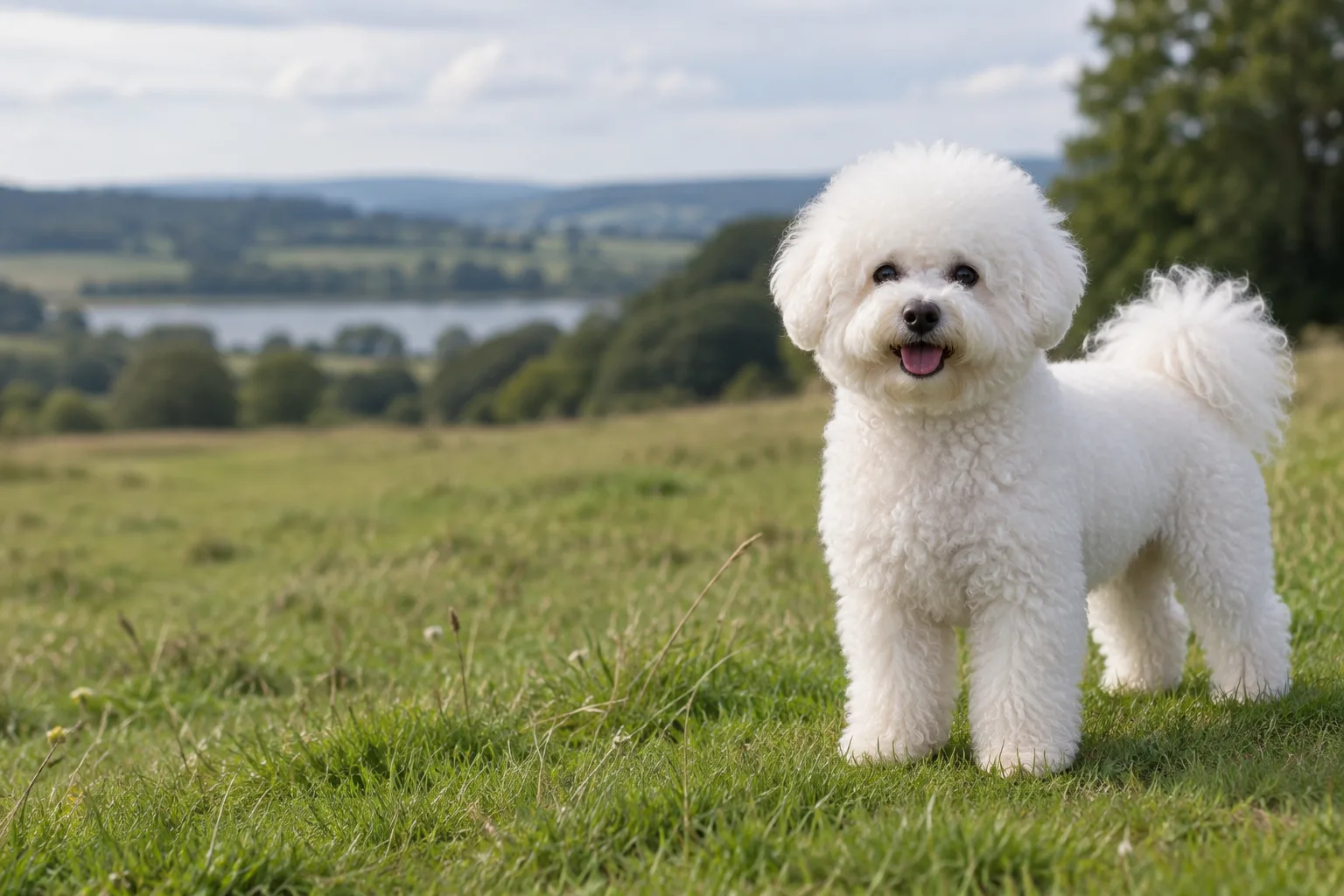
Why does a dog that looks like it has been powdered and fluffed for a portrait also behave like a small, cheerful clown? The answer sits in its past, and it is a more varied past than most people expect. We keep a short story of the breed on its page in the archive. This is the longer one.
A note on how we have written it. Breed history is full of neat stories that nobody can trace to a source. Where a claim rests on the published breed histories, the Kennel Club, the AKC or the breed clubs, we say it plainly. Where it is a tale that has been repeated for generations, we say that too.
A small white dog of the Mediterranean
The Bichon Frise belongs to a family of small, long-coated, mostly white dogs that the breed histories group together as the Bichon type. Its relatives include the Maltese, the Bolognese, the Havanese and the Lowchen. The family name is often traced back to the Barbichon, a word linked to the water spaniel known as the Barbet, and to the small white dogs that were crossed with it. That is how the histories usually explain the shortened name "Bichon".
Where these little dogs first appeared is harder to pin down. The most common account places the breed's ancestors around the Mediterranean and links the Bichon Frise in particular to the island of Tenerife. In that account, Italian sailors of the fourteenth century found the dogs there and carried them back to Europe. You will see it repeated in most breed books, and the breed even had a period of being called the Bichon Tenerife. We would treat it as the traditional account rather than a documented voyage. What can be said with more confidence is that small white lap dogs of this general kind were being kept in southern Europe by the Renaissance, and that they were valued for company rather than for labour.
That last point matters, because it separates the Bichon from so many of the breeds in our collection. There was no flock to move and no vermin to clear as the main job. The Bichon was bred to be near people. Everything about it that seems charming, from the round dark eyes to the habit of following you from room to room, comes from centuries of being chosen for exactly that.
Courts, painters and a fall from favour
The Bichon type became fashionable among the wealthy. The histories describe the dogs as favourites of Italian nobility and later of the French court, with the reigns of Francois I and Henri III usually named as the high points. A story that goes with Henri III says his dogs were carried about in baskets hung from ribbons round his neck. It is a lovely picture and it turns up in nearly every breed history, though we would call it a well-worn tale rather than a proven fact.
The dogs also travelled to Spain, where the Bichon type is said to have found favour with the Spanish court. Painters of the period are often credited with including small white dogs in their portraits, and Goya is the name most often given. If you want to look for them yourself, it is a satisfying thing to do in a gallery. Small fluffy white dogs at the feet of the wealthy are a recurring sight in European art, though it is not always possible to say which of the Bichon relatives a painter had in mind.
Fashion is a fickle patron, and lap dogs of the court have always been at its mercy. By the nineteenth century, the histories tell us, the Bichon had slipped down the social scale. Rather than disappear, the dogs found new work. They became street dogs in France, and the breed histories describe them as companions of organ grinders, performers at fairs and circus acts. Their intelligence, their liking for an audience and their willingness to learn tricks made them natural entertainers.
Here is a piece of history that shapes the dog beside you on the sofa. A breed that has been both a courtier and a street performer has had to be sociable in every circumstance. It has had to like strangers, tolerate crowds and stay cheerful in a noisy setting. Those are still the traits owners describe most often today.
The near-loss and the naming of the breed
The First World War was hard on the dog breeds of northern Europe, and the Bichon was no exception. Breeding was disrupted, and the histories describe the population as small enough afterwards that the type was at risk. The credit for pulling it back goes to a group of French and Belgian breeders in the years between the wars, who set about gathering the surviving dogs and breeding them to a shared idea of the type.
The official steps are well recorded. A breed standard was drawn up and adopted in France in 1933. The name that we use now, Bichon a poil frise, was accepted the following year. It translates roughly as the curly-haired Bichon, and it did something useful: it separated the breed from its smooth-coated relatives and gave it a clear identity of its own. In English we shorten it to Bichon Frise, and the pronunciation "bee-shon free-zay" is the one the breed clubs use.
It is worth pausing on what those breeders were doing. They were not creating a new dog. They were taking the surviving street and fairground dogs, a group with no particular pedigree, and fixing a look that already had centuries of history behind it. The white coat, the plume of a tail carried over the back and the dark, alert expression all come from that period of careful consolidation.
Crossing the Atlantic and arriving in the UK
The Bichon Frise came to the United States in the middle of the twentieth century. The usual account credits a French couple who settled in Milwaukee, and the mid 1950s are given as the date of the first US litter. From there a small number of enthusiasts built up a breeding population. The AKC recognised the breed in stages: it was admitted to the Miscellaneous Class in 1971 and moved into the Non-Sporting Group in 1973. It is in that group today, alongside breeds as different as the Dalmatian and the Poodle.
The UK came to the breed later. Bichons were imported in the 1970s, and the Kennel Club now places the Bichon Frise in the Toy Group. The difference in grouping between the two countries is a small reminder that clubs sort dogs by history and tradition as much as by size. Both classifications describe the same dog: a sturdy little companion with a profile that has hardly changed since the paintings.
If you are reading from either side of the Atlantic, the modern breed will feel familiar. The breed clubs in both countries describe it in similar terms: small, sturdy, cheerful, and happiest close to people.
What all of this means for living with one
History is only interesting if it explains something, so here is what we think this one explains.
The company. A dog bred for centuries to be a companion, and then to work a crowd, does not enjoy long hours alone. Bichons tend to do best in households where someone is about for much of the day. If that is not your situation, it is worth thinking carefully before choosing the breed.
The coat. The curly white coat is the breed's signature and it needs regular attention. Brushing is part of the routine, and most owners also use a groomer. It is a feature that came from the show ring and the fashionable household rather than from any need to be out in weather, and it asks for a household that will keep up with it.
The showman. The years spent as a street and circus performer left a dog that learns quickly and enjoys being asked to do things. Short, cheerful training sessions suit it far better than long, stern ones. It also tends to enjoy an audience, so do not be surprised if it finds the moment a visitor arrives is the moment its best tricks appear.
The size. Because it was bred to live alongside people rather than to work, the Bichon fits easily into flats and small houses. It still needs daily exercise and something to think about, but it does not need a field.
None of this is a guarantee about any individual dog, of course. Every Bichon is its own character. But when a breed has been shaped by the same job for five hundred years or so, that job leaves fingerprints, and the fingerprints of this one are affection, showmanship and a strong wish to be included.
We have made an archive plate for the Bichon Frise, an original digital engraving of the breed. If the story above has made you curious about the dog itself, the plate on its breed page is where we would send you next.
See it in the archive: The Bichon Frise archive plate