
Breed Histories · 26 September 2026
The History of the French Bulldog: From Lace to Paris
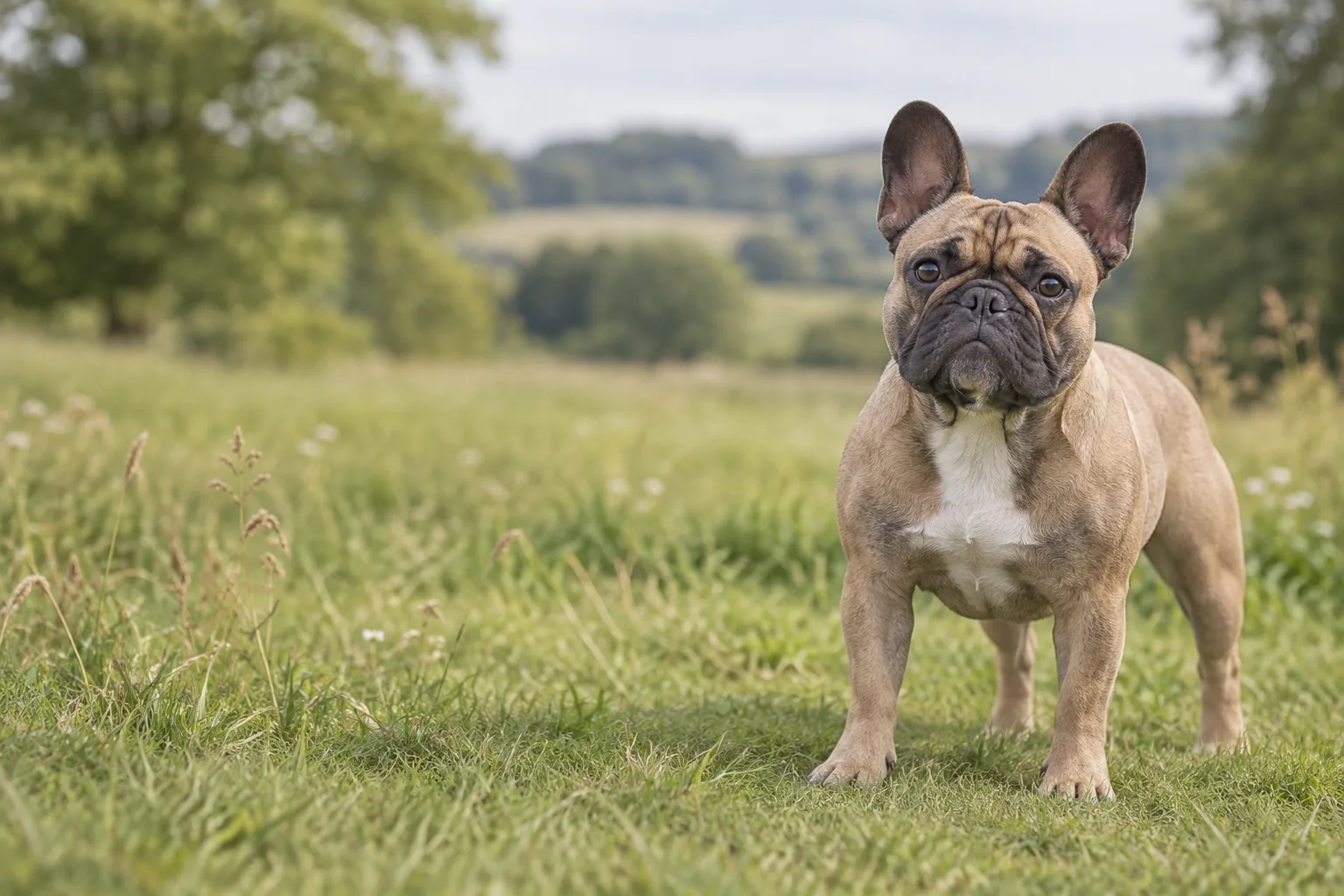
Why does a dog with such a strong French reputation have a name that starts with Bulldog? It is the first thing I ask when I open the file on this breed, and the answer takes us out of Paris and back to the English Midlands.
Before I begin, a note on how I work. I do not print a date, a place or a name unless it can be traced to a kennel club, a breed club or a published breed history. Where the record is thin, or where a popular story cannot be supported, I say so. This breed has plenty of both.
A small Bulldog with a job to do
The French Bulldog starts with the Bulldog of England. By the nineteenth century the old bull baiting work of the Bulldog had been outlawed, and the breed had to find a new place in the world. Some were bred for looks, and some were bred smaller and lighter, the sort of dog a household could keep in a small room.
The usual account of the breed places these small Bulldogs, often called toy Bulldogs, with the lace makers of Nottingham. Lace work was done in homes and small workshops, so a compact, quiet, affectionate dog that would sit near the work suited it. It was a companion first. Nobody was asking it to guard a farm or hunt vermin across a field, and that matters, because it explains a great deal about the dog we know now.
Then the trade changed. As mechanised lace production grew, many lace workers left England for northern France, taking their small Bulldogs with them. Normandy is the region most often named. This is the part of the story that gives the breed its French name and its French reputation, and it is why I say the breed was made in England and finished in France.
What was in the mix beyond the Bulldog is where I have to be careful. Breed histories commonly say that French breeders crossed the little Bulldogs with local dogs, and that terrier types may have been involved. That is a reasonable account, but no stud book from the time exists to prove it, so I record it as the accepted story rather than as a proven pedigree. The Frenchie is a breed that was assembled by many hands over a few decades, rather than designed on a single day by a single person.
Paris takes the breed up
By the later part of the nineteenth century the little dogs were established in Paris, where they became fashionable city dogs. Their size was ideal for apartment life, and their sociable, clownish manner made them easy company. The breed became known as the Bouledogue Français, and that is still its name in France today.
You will often read that Parisian artists and well known figures of the period kept them and painted them. It is a lovely picture, and it is part of the breed's tradition, but I treat the list of names as folklore unless I can point to a specific work or record. What I can say more safely is that the dog was strongly linked with city life in Paris and was a favourite of the people who lived close to one another in small rooms.
The look that we now think of as unmistakable was settled during this time. The flat face, the short muzzle, the wide, square head and the sturdy little body all come from the Bulldog. The upright ears are the striking difference. English toy Bulldogs had ears that folded back, known as rose ears. In France, breeders came to prefer ears standing straight up, the ones we call bat ears, and that single feature became the breed's signature.
The ear row and the road to recognition
The French Bulldog then crossed the Atlantic. American fanciers were importing the breed in the late 1890s, and the American Kennel Club and the French Bulldog Club of America both date from that decade. The record I trust shows the American club being formed in 1897 by a small group of enthusiasts, and the breed being shown in America soon after.
Here comes the argument that shaped the breed. Some of the early dogs shown in America had rose ears, and there was a real dispute about which ear was correct. The American club held firm that the bat ear was right, and that is the ear written into the standard there. In Britain the position was less rigid at first, and the two countries did not always agree. If you have ever wondered why a Frenchie has that upright, alert ear and not a folded one, the answer is a group of committed breeders who decided it should be so.
In Britain, The Kennel Club recognised the breed in the early twentieth century, and the breed was at first registered under its French name. It was later known as the French Bulldog. A breed club followed in England, and the dogs began to appear on the show benches under that name. I would rather leave the exact registration dates to the breed club and the club's own records than repeat a year I cannot check in this piece, so if you are researching a pedigree, go to those sources first.
One more story deserves mention, because it has been told so often. A French Bulldog is said to have been among the animals travelling on the Titanic in 1912, and the owner is reported to have insured the dog. I include it only as a report from published accounts, and I would not hang any weight on the details. It shows how far the breed had travelled in a single generation: from small back rooms in lace towns to first class travel among wealthy owners.
What the working past left behind
This is the part I care about most, because a breed history is only useful if it tells you something about the dog on your sofa.
The first thing the history tells you is that the Frenchie was never built to work outdoors. It was bred as a companion for close, domestic life, in homes, workshops and city streets. That is why the breed tends to be a people dog, happy to be underfoot, and why many owners describe it as a dog that wants to be in the same room as them at all times. It is also why a Frenchie can find long stretches alone difficult.
The second thing is the body. The short face is what people love, and it is also the point where an honest history has to speak up. Dogs with very short muzzles can have difficulty breathing, and they can struggle to cool themselves in hot weather. Both The Kennel Club and the AKC publish breed information, and veterinary bodies in the UK have raised concerns about the health of flat faced breeds. If you are thinking of getting one, please read the current guidance from those organisations and speak to a vet about what to look for in a breeder. I am an archive, not a vet, and I would sooner send you to the right people than pretend to advise.
Some practical points follow from the breed's shape and history, and I put them plainly:
- Keep exercise gentle and well timed, and take particular care in warm weather, in the UK as well as the US.
- Expect a companion dog. Time alone matters to a breed that was made for company.
- Choose a breeder who health tests and who can talk openly about breathing, spine and skin, and ask to see the parents.
- Keep the facial folds clean and dry, as your vet advises.
The third thing is the temperament. A dog bred over generations to live alongside people, in small spaces, has learned to read a household. The Frenchie's reputation for comedy, stubbornness and affection is not an accident. It is a job description. The dog was asked to be good company, and it became very good at it.
And the fourth is popularity. In recent years the breed has climbed the registration lists on both sides of the Atlantic, and it has been described as among the most popular in both the UK and the US. That is a reason to be cautious, not just to celebrate. When a breed becomes a fashion, demand can outrun care, and the dogs pay for it. If the breed's history is one of a dog made for closeness and comfort, the fairest thing we can do is to keep faith with that and to buy and breed responsibly.
That is the short version of a long and untidy story: an English lace town dog, a French city favourite, an American ear argument and a modern favourite that deserves better protection than fashion gives it. Some of it is documented, some of it is tradition, and I have tried to keep the two apart.
If you would like to see the breed as I keep it, the archive plate for the French Bulldog is an original digital engraving, drawn for the collection. It is the quiet companion to this article, and the best place to see that bat ear, that broad head and that steady look in one image. You will find it on the French Bulldog page of the archive.
See it in the archive: The French Bulldog archive plate