
Breed Histories · 26 September 2026
The History of the Siberian Husky
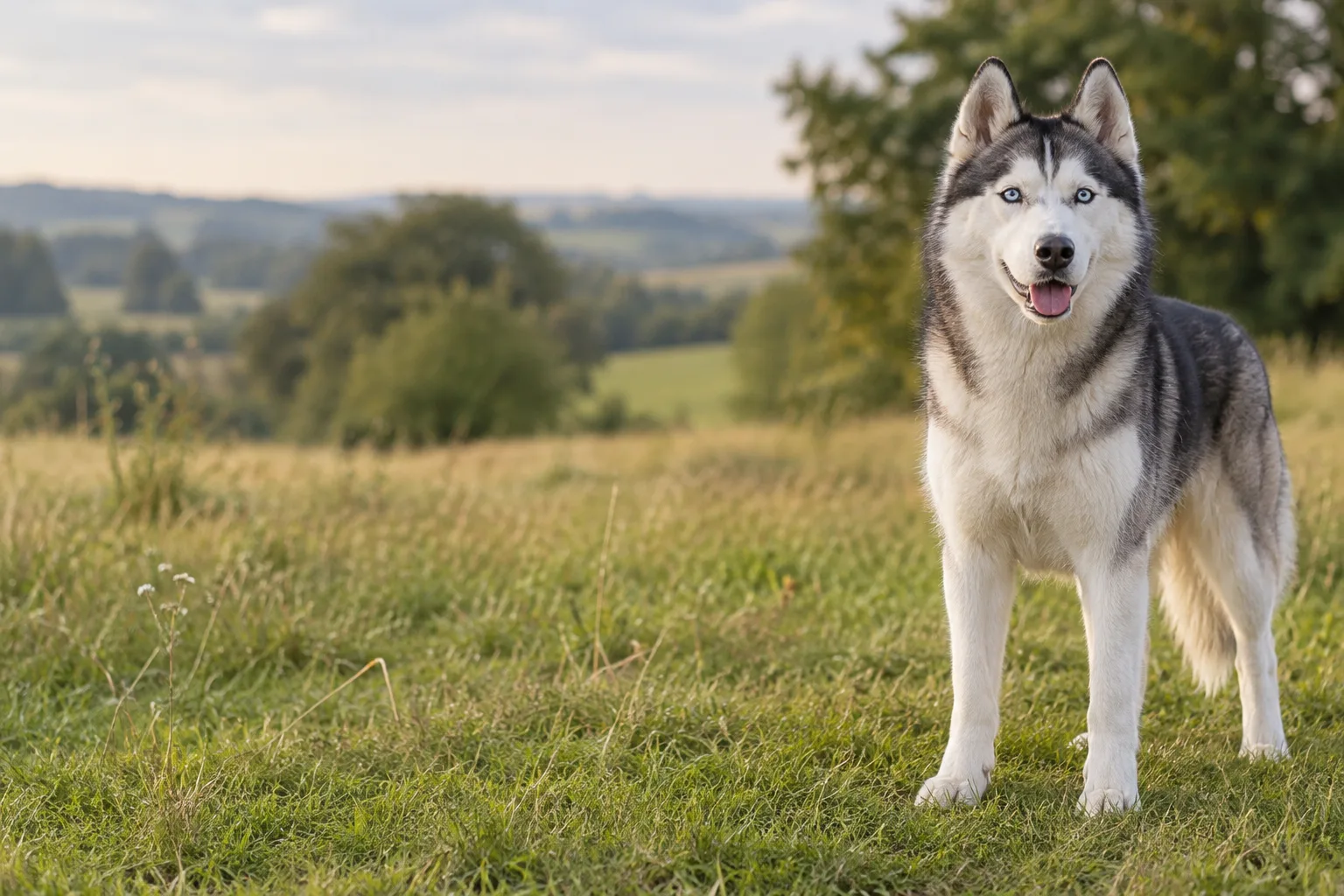
Why does a Siberian Husky behave as though the garden fence is a polite suggestion, then lie in the snow as if it were a feather bed? Because nothing about this dog was designed for a sofa. Almost everything you see in a Husky, the light frame, the thick coat, the restless feet and the opinion about your recall, was shaped by a particular job in a particular place. Here at the archive, we think the breed makes far more sense once you know that story.
Where the breed began
The Siberian Husky takes its origins from the Chukchi people of the Chukotka Peninsula, in the far north-east of Siberia. The Chukchi lived in one of the hardest climates people have ever settled, and the dogs they kept were part of how they managed it. Breed histories, including those held by the breed clubs, describe dogs that lived close to the family, hauled loads across frozen ground and sea ice, and did it on modest rations.
That last point matters more than it sounds. Chukchi dogs were not built to haul the heaviest possible weight. They were built to pull a light to moderate load over very long distances, at a steady trot, without burning through the food they were given. Think of a distance runner rather than a weightlifter. That preference for efficiency is written into the modern standard, which calls for a medium-sized, compact, athletic dog with moderate bone, and specifically not the bulk of the heavier northern freighting breeds.
Their look follows the work too. The dense double coat, a soft undercoat beneath a straighter outer coat, kept heat in and cold out. The tail, carried in a brush and curled over the back when the dog is relaxed, can be wrapped over the nose when the dog sleeps in the open. The erect, furred ears resist frostbite better than a big flopping ear would. Even the eyes are part of the picture: brown, blue, or one of each are all accepted, a variety many people assume is unusual but which the breed standards treat as perfectly normal.
As for the name, you will often read that "Husky" grew out of a nickname for the dogs of the north, sometimes linked to a shortened word for Eskimo. It is a plausible tale and it is repeated widely, but we treat it as a story about the word rather than a fact we can prove. What we can say is that the dogs came to be known in English as Siberians, and later, in the show world, as Siberian Huskies.
Arriving in Alaska and the racing years
The dogs reached Alaska in the early twentieth century, in the years of the Nome gold rush, when fur traders and others brought teams across the Bering Sea. Racing was already a passion there. The All Alaska Sweepstakes, a long-distance sled dog race between Nome and Candle and back, began in 1908 and became the great test of the day.
The newcomers were not taken seriously at first. Beside the big freighting dogs that Alaskan drivers were used to, the small imported dogs looked slight, and were dismissed with the unkind nickname "Siberian rats". Then they began to win. A Scottish-born sportsman, Fox Maule Ramsay, entered teams of them in 1910, and a team driven by John "Iron Man" Johnson took the race that year. Speed and stamina, it turned out, beat size.
One name towers over this period: Leonhard Seppala, a Norwegian-born musher who lived in Alaska. Seppala took up the breed and built a reputation with his teams over several racing seasons. His most famous dog was Togo, a small, tough lead dog who became a legend in his own lifetime. If you want to understand what these dogs were for, look at what Seppala asked of Togo, and what Togo delivered.
Nome, 1925: the run everybody knows
In the winter of 1925 an outbreak of diphtheria threatened the town of Nome, and the antitoxin it needed was a very long way off. There was no way to fly it in through the winter weather then, so the serum was carried by dog team, passed from musher to musher in a relay that covered roughly 674 miles in about five and a half days. It is one of the best known dog stories in the world, and the Siberian Husky sits at the centre of it.
Two dogs are usually named. Seppala and Togo ran the longest and most dangerous stretch, across hazardous ice, out and back. The last leg into Nome was run by Gunnar Kaasen and his lead dog Balto, and it was Balto who got the fame: a statue of him was put up in Central Park, New York, within the same year. Many people who know the history feel that Togo's part was the harder and the less celebrated, and the argument over who deserves the credit is still a lively one. We will not settle it here. What is safe to say is that a relay of dogs and drivers got the serum through, and that the breed's public reputation was made in a single winter.
The story can be told with too much gloss, so a word of caution. The dogs did not run alone: the relay involved around twenty drivers and their teams, and many of those dogs never had a name in the newspapers. That is part of the archive's job too, to give the whole picture rather than just the poster.
Recognition, and a narrow escape
The breed's fame carried it south and east. Seppala took teams to New England in the later 1920s and raced them there, and enthusiasts in the region became early breeders. The American Kennel Club recognised the Siberian Husky in 1930, placing it in its Working Group. The Siberian Husky Club of America followed in 1938, and it has looked after the breed's standard ever since.
Here is the part that surprises many owners. The dogs in the West did not have an endless supply behind them. Exports of the dogs from Siberia stopped around 1930, when the border closed, and the breed outside Russia grew from a fairly small number of imported dogs. That is a narrow foundation for a whole breed, and it explains why early breeders in North America were so careful and so protective. The Siberians you meet today mostly trace back to that handful.
Later chapters were shaped by conflict. Sled dogs were used for polar exploration in the early 1930s, and during the Second World War the US armed forces used dog teams for search and rescue and for moving supplies in Arctic conditions. The precise numbers of dogs and their individual careers vary from one account to another, so we will not pin them down here, but the pattern is clear: whenever a machine could not go, a team of these dogs often could.
After the war the Siberian Husky moved gradually from working teams into family homes and show rings. In the UK the Kennel Club also places the breed in its Working Group, and the breed has built a devoted following on both sides of the Atlantic, from show handlers to people who simply love the face.
What that history means at home
Once you know the job, the personality is no mystery. A dog bred to trot for hours will not be content with twenty minutes round the block. Plan for real, daily exercise, and for the kind of variety that keeps a clever dog interested. Many owners in the UK and the US take up canicross, bikejoring or long walks on lead, which are close cousins of the old work.
That same independence is why off-lead reliability is so hard with the breed. A dog whose ancestors ran ahead of a sled, following the trail and the driver's voice at a distance, has a strong instinct to keep going, and a good many have a strong prey drive as well. Most experienced owners use secure fencing and a long line rather than trusting recall near roads or livestock. That is not a training failure. It is the breed doing what it was made to do.
The coat asks for respect too. It is built for cold, so summer heat, especially the muggy days that catch UK owners out and the long hot spells in much of the US, needs care: shade, water, and exercise in the cool of the day. Expect a heavy shed, usually once or twice a year, when the undercoat comes out in handfuls. Shaving does not cool the dog and can spoil the coat's insulating job, so we would brush rather than clip.
Finally, this is a dog bred to pull with a team, and it usually likes company. Left alone and bored, a Husky can be loud, restless and inventive about escape. Given a job, a routine and people to share it with, it can be one of the most cheerful, affectionate companions you will meet.
The Siberian Husky has come a long way, from the Chukchi camps of north-eastern Siberia, through the Nome trail and the New England kennels, to the front rooms of today. If you would like to see the breed as we see it, the archive plate for the Siberian Husky is an original digital engraving, and you will find it on the breed's page on our site.
See it in the archive: The Siberian Husky archive plate